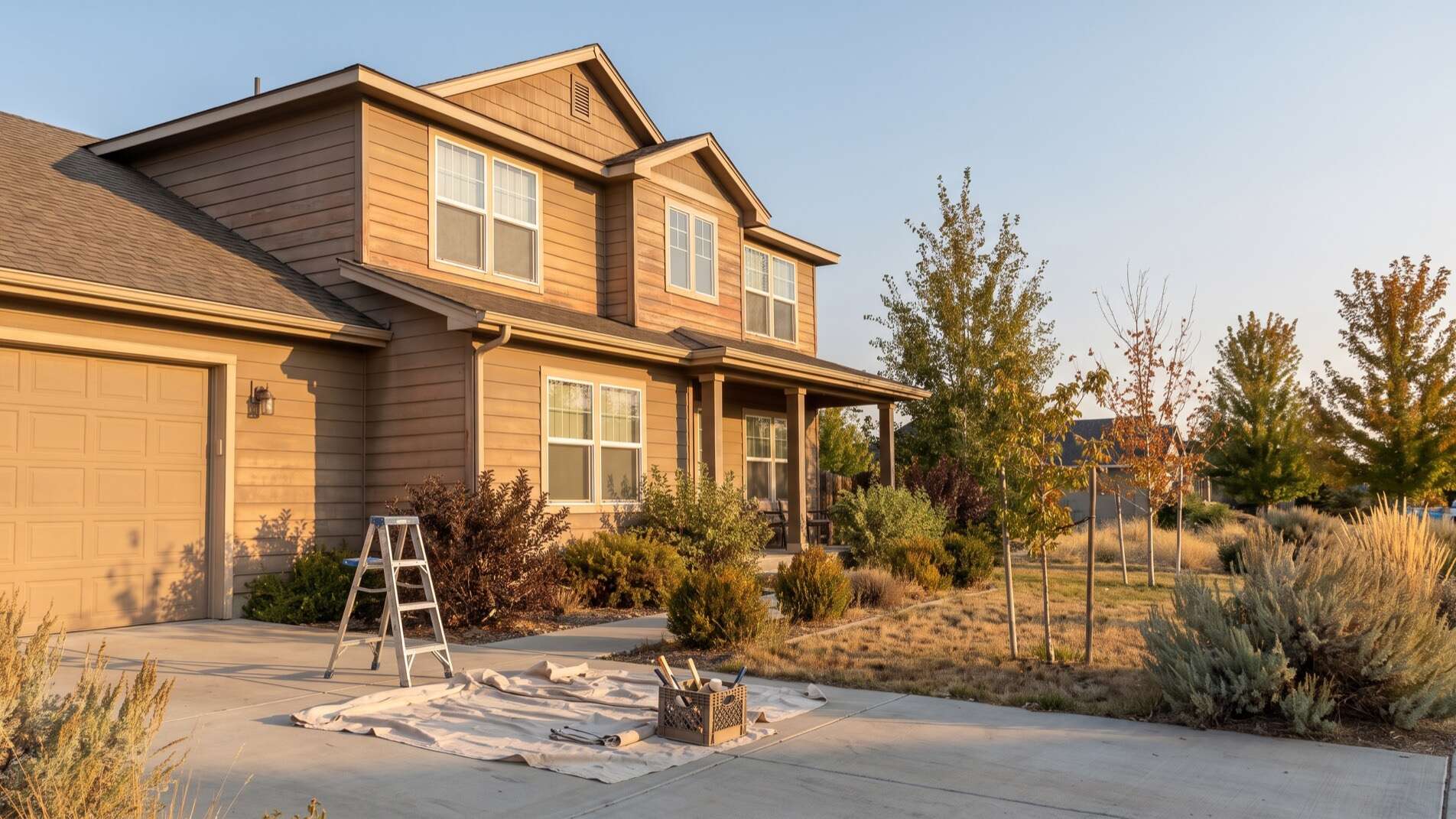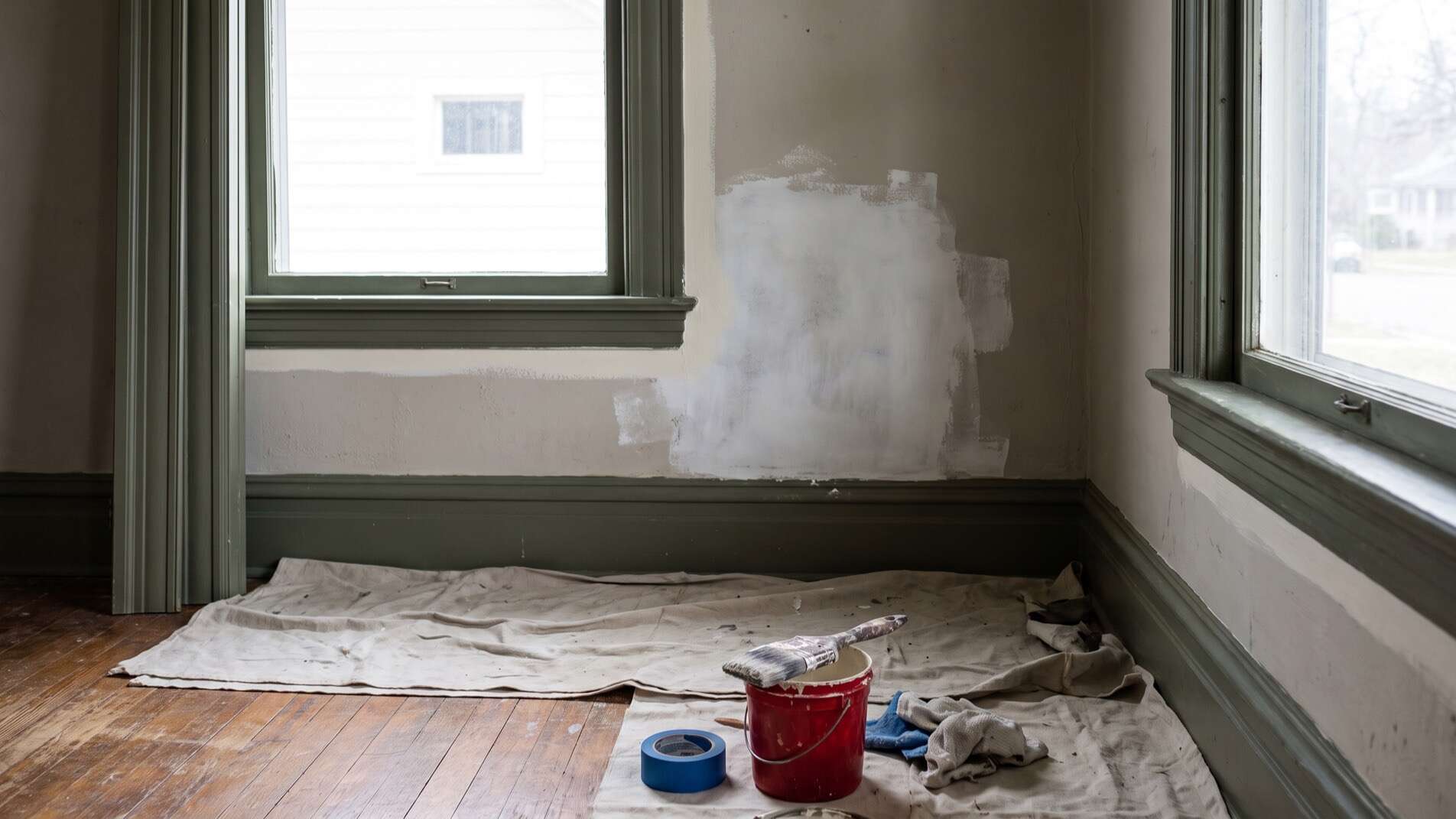

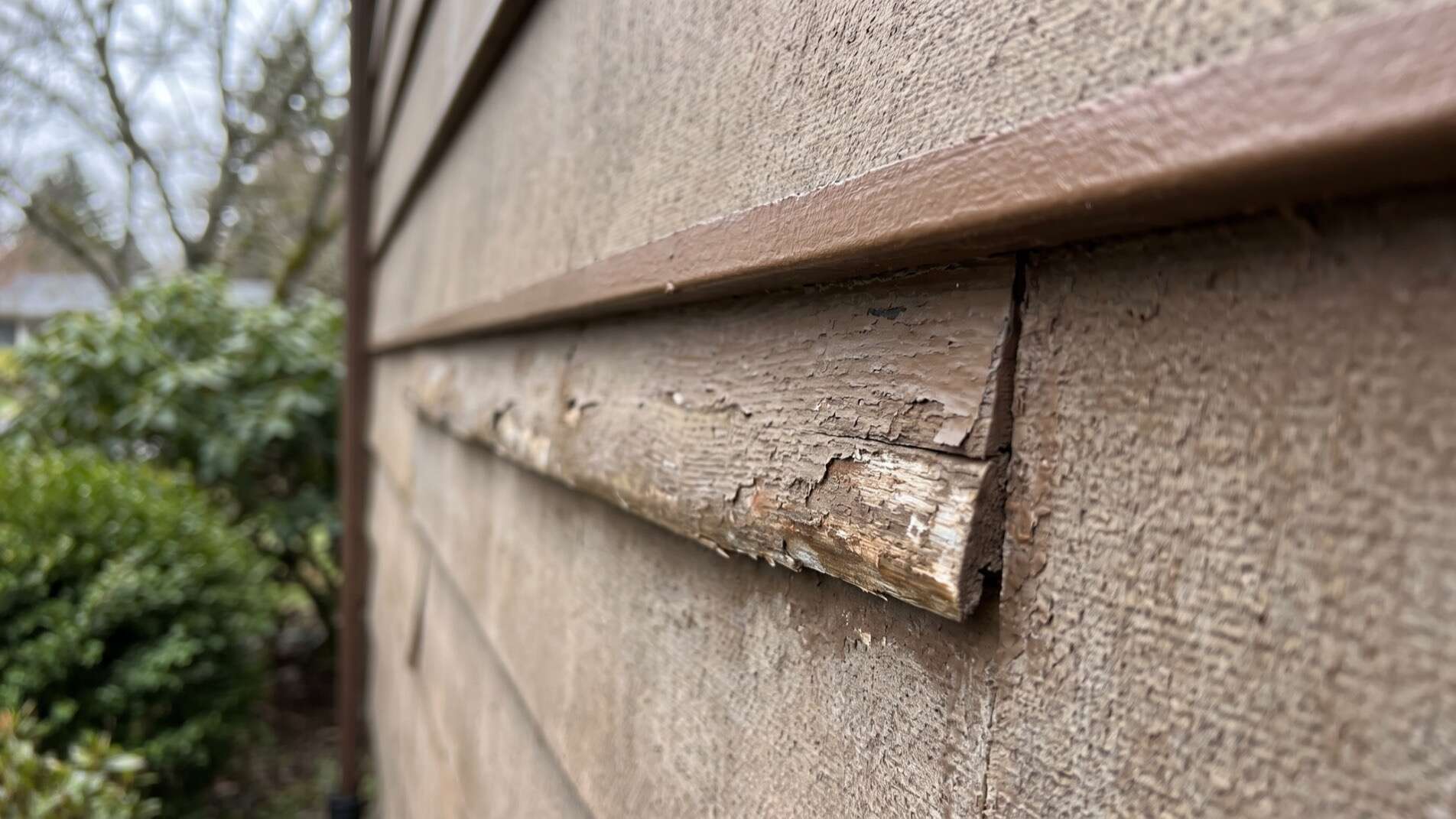
A homeowner four blocks off the Greenbelt called us about a 1989 two-story. She wanted a color change, nothing more. Standing at the northeast corner, before anyone had said a word about paint, we pressed a thumb into the bottom lip of a board under the kitchen window and it gave like cork. Three courses along that shaded wall had been wicking water for years through cut ends nobody had sealed since the house was built.
That siding was masonite, the pressed wood-fiber hardboard that went on a lot of Treasure Valley homes between roughly 1980 and 1995\. The rest of her exterior was genuinely fine. The south wall was tired but sound, and the west side had another season left in it. What turned a color change into a bigger project was four boards on one wall, and the distance between four boards and a full wall was somewhere around 18 months of waiting.
That is the arithmetic that runs older Garden City exteriors. Paint on hardboard isn’t decoration, it’s the waterproofing, and once the film opens up the scope climbs on a curve instead of a straight line. Everything below is about reading that curve early.
Why Garden City Exteriors Live Wetter Than the Rest of the Valley
Homes here sit closer to water than almost anywhere else in the region. Between the river, the Greenbelt, and the irrigation network threading through the 30th-to-50th street grid, there is moisture in the air and in the ground that houses out in Kuna never deal with. Add in older housing stock, a lot of mid-century places behind the Chinden corridor alongside newer infill townhomes, and you get exteriors that need real protection rather than fresh color.
Sun takes the blame for most coating failure around the Valley, and on a south wall that’s fair. Near the river, though, the north side is usually the problem child. Shaded walls stay damp long after a rain and hold frost deep into winter mornings. Moisture sits against the film, works into any tired caulk joint, freezes, and expands. Stack up a few dozen of those cycles and the coating starts lifting in sheets.
Mid-century homes add their own wrinkle. Many still carry original wood siding and trim under decades of accumulated paint layers, and old layers hide soft spots. We find them by feel during prep, probing trim and lower boards, because putting new color over punky wood wastes your money outright. Small sections get repaired first, then primed, so the new coat is protecting sound material.
Newer townhomes near the river aren’t exempt either. Tight lot lines create side walls that never fully dry, and fiber cement joints still need their edges sealed. Different construction, same opponent. Anything wood out back takes the identical load, which is why deck and fence painting usually rides along with an exterior repaint here.
Masonite, Wood, and Fiber Cement: How Each One Fails
Three materials cover most of what we paint in this part of town, and each one tells you it’s in trouble in a different language. Here is the short translation.
| Siding | How it behaves | First sign of failure | Prep it needs |
|---|---|---|---|
| Masonite hardboard, roughly 1980 to 1995 | Compressed wood fiber with no water resistance of its own. The coating is the entire defense. | Swelling, mushrooming, or a wavy line along the bottom lip of a board. | Sand back the failed film, seal every edge including cut ends, prime with a product made for hardboard, topcoat with a flexible premium exterior paint. |
| Wood, cedar and pine on mid-century homes | Moves with humidity and holds many old layers. Tolerates neglect longer than hardboard but hides rot underneath. | Bare grain showing at knots, layer separation, and soft spots you can feel through the paint. | Scrape and sand to a sound edge, probe and replace punky sections, spot-prime knots and raw grain, re-caulk every joint that has opened. |
| Fiber cement, newer infill and townhomes | Dimensionally stable and durable, but it drinks water through any raw edge. | Chalking on sun walls and dark wicking marks at trimmed ends and butt joints. | Wash off chalk, seal cut ends and joints, prime bare areas, then two coats rated for UV and flexibility. |
Read the table as a diagnosis tool, not a schedule. Two houses with the same siding on the same street can be five years apart depending on shade, sprinkler spray, and how the last crew handled the edges.
Not sure which of the three is on your walls? That’s a two-minute answer in person. Call 208-972-0565 and we’ll come look before you spend anything.
What Waiting One More Year Actually Changes
Damage on an exterior does not advance evenly. It advances in stages, and each stage costs more than the one before it.
Stage one is film failure, and it’s cheap. The coating cracks, chalks, or loses adhesion, but the substrate underneath is sound. Wash, prep, prime, paint, and you’re done at the low end of any estimate.
Stage two is substrate absorption. Water has been getting through for a season or two. Hardboard swells at the edges, wood softens at butt joints, fiber cement wicks at cut ends. This is still a paint job, but now it carries carpentry: cutting out boards, replacing trim, rebuilding a corner. Each repair adds labor before a brush ever moves.
Stage three is structural, and that’s where you stop calling painters and start calling siding contractors. The gap between stage one and stage three is rarely more than a few winters on a shaded wall, and that is the entire case for handling it now rather than next season. Our exterior painting services page lays out what gets included at each level of prep.
How We Work in Garden City
We’re a family-owned company working in the Treasure Valley, and this corner of it is regular territory. When you call, you get someone local who understands why a north wall two blocks off the Greenbelt behaves differently than the same wall in a Meridian cul-de-sac. No franchise script, no out-of-state call center.
Every project opens with a free estimate at your house, since condition drives cost on older homes. We walk the exterior together, show you what we find, and follow up with a detailed written scope. Color guidance comes with it: samples on your actual siding and recommendations suited to a mid-century place or a late-90s two-story. Our Garden City service area page covers the streets we work most often.
The mid-century houses are our favorite assignment in this neighborhood. A 1958 ranch with good bones and 60 years of muddy repaints on it comes back in a clean two-tone scheme looking better than it did new, and the neighbors always notice before the drop cloths are folded.
One note on geography. We paint plenty of exteriors in West Boise too, out around Ustick, Five Mile, and Cloverdale, where those same 1980s and 90s builds run block after block. If your house sits on that side of the line, our West Boise piece covers that market in more detail.
FAQ
Can masonite siding be painted, or does it have to be replaced?
If the boards are still sound, hardboard takes paint very well and repainting is precisely how you keep it in service. We sand back the failed film, seal all edges, prime with the right product, and finish with a flexible premium topcoat. Boards that have already swollen or crumbled get replaced first. Hardboard fell out of favor after litigation in the 1990s and is rarely specified on new construction now, so replacement material is a special order rather than a shelf item. One more reason to catch it at the paint stage.
Why is paint peeling on the north side of my house and nowhere else?
Shade is doing it. North walls near the river stay damp longer after rain and frost, so moisture gets extra hours to work into the coating and any open caulk joint. Freeze cycles then lift the film from underneath while the sunny sides look untouched. Correcting it means real prep on that wall specifically: scraping to a sound edge, priming bare areas, and re-caulking before a quality topcoat goes on.
Do you paint older homes with many layers of old paint on them?
Regularly, and this neighborhood’s mid-century stock is a steady part of our week. We scrape and sand the failing layers, probe for soft or damaged wood underneath, make repairs where they’re needed, and prime before any color goes on. Thick old paint demands that groundwork, because otherwise your new coat simply goes along for the ride when the old layers finally let go.
How much should I budget to paint a Garden City exterior?
Projects in this area generally fall between $3,000 and $8,000. On older homes, material and condition move the number more than square footage does, since a hardboard house with edge swelling carries repair labor that a sound fiber cement house doesn’t. Custom and cedar-sided homes can reach $10,000. Treat those figures as a planning band, then let the in-person assessment produce the actual scope and price.
How often does an exterior near the river need repainting?
Plan on seven to 10 years for the house overall, with the caveat that shaded walls often need attention sooner. A north face two blocks from the water can be ready for work while the south face still has years in it, and restoring that one wall on schedule beats repainting everything early. We’ll say so when a partial makes more sense than a full repaint.
Get the Cheap Version of This Project
If your siding is showing swollen bottom edges, split caulk, or peeling on the shady side, this is the stage where the fix is still small. Call Funky Painting at 208-972-0565 or send us a note through the contact page and we’ll come read your walls in person.
We’re licensed and insured, and our 5-year workmanship warranty stands behind every exterior we finish, covering application failures such as peeling, blistering, and flaking. Your house goes into winter sealed, sound, and looking sharp.