
Walk the blocks around Hyde Park as summer winds down and you can feel the year start to tip. Afternoons still push past 90, but the light turns gold a little earlier every week and the maples along Harrison Boulevard are only weeks from changing. If you live in the North End, up Collister Drive, or in the Highlands off Bogus Basin Road, that tip arrives with the same thought attached. The living room has needed paint since last winter, and the holidays are closer than the calendar makes them feel.
North Boise interiors are a different animal from the rest of the valley, and we say that with affection. Funky Painting works throughout the Treasure Valley, and a large share of that work has been inside early 1900s North End houses with original plaster and fir trim, plus the mid-century places along Collister and the Highlands homes climbing toward the foothills. Drywall-era rules don’t apply in most of them. Plaster cracks on its own logic, old woodwork hides a stack of decisions made by other people, and rooms shaded by 80-year-old trees swallow light in a way no paint chip predicts.
Now is the moment to book it. September and October are the months to paint it. Either way, there’s real margin before anyone’s in-laws pull into the driveway.
Why North End Plaster Belongs in Its Own Category
Houses around Hyde Park and Harrison Boulevard mostly went up between 1900 and 1940, which means wood lath and plaster instead of gypsum board. Plaster went on in three passes. A scratch coat pushed through the gaps between lath strips and curled over behind them, forming keys that lock the wall in place. A brown coat leveled it. A thin finish coat gave you the hard, slightly wavy surface you still see today.
That system is harder than drywall, quieter, and full of character. It also moves. A century of settling, dry summers, and furnace-baked winters snaps some of those keys, and a section of plaster separates from the lath and sits there loose. Knock across the wall and the tone shifts from a tight tap to a hollow thud. That hollow spot is what crumbles under a fresh coat.
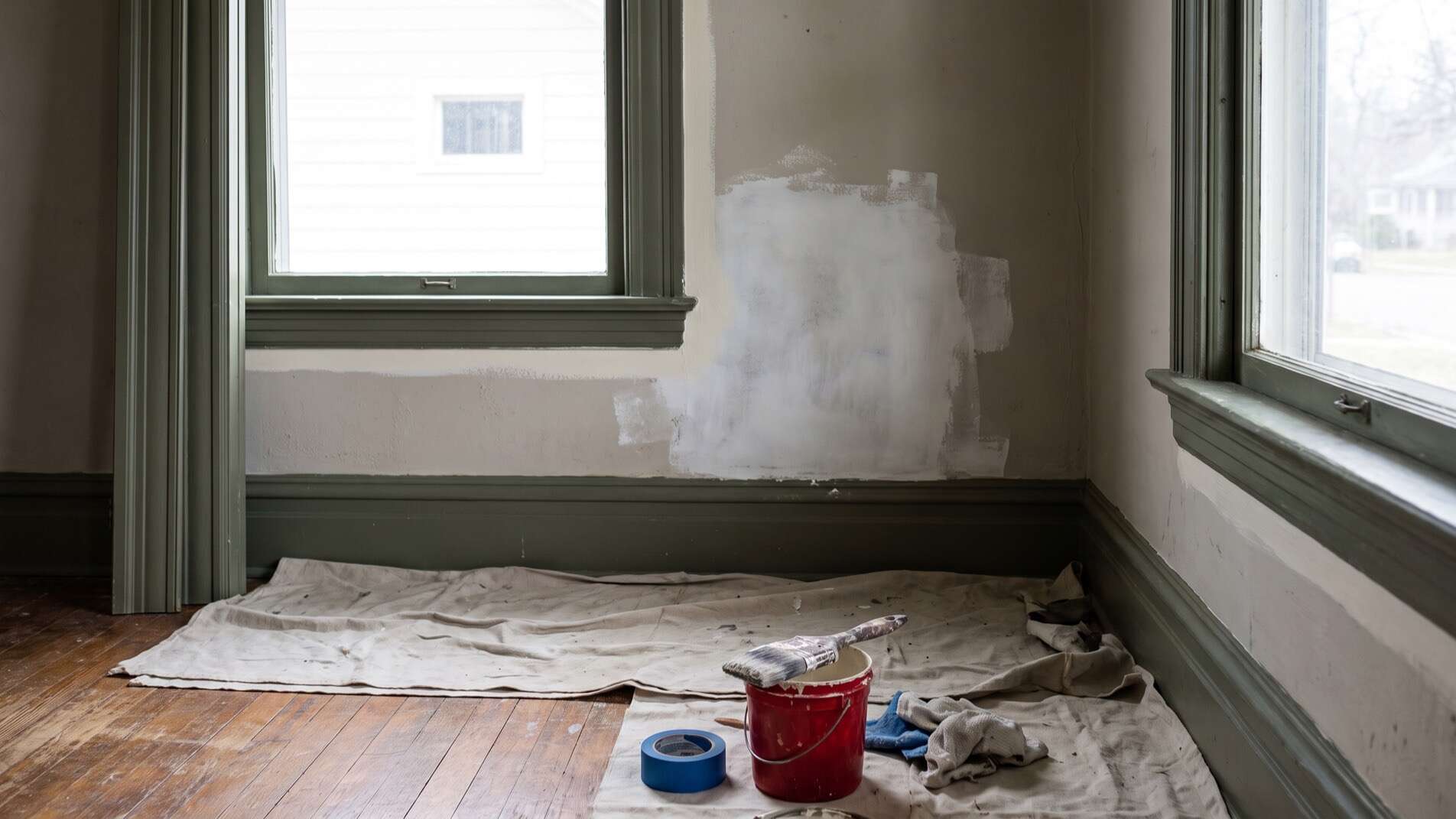
Painting over damage like that buys a single season. We handle it the slow way instead. Real cracks get raked open and filled with a flexible compound rather than smeared with spackle, wavy areas get skim coated flat, and loose sections get re-anchored with plaster washers driven into the lath or framing first.
Old plaster is also thirsty. It’s porous, often chalky at the surface, and it pulls the binder straight out of a paint never designed for it. A sealing primer made for aged surfaces is the difference between a finish that stays uniform and one that flashes by spring.
Lead, Layers, and the Wood Underneath
Any Boise house built before 1978 can have lead-based paint somewhere in the stack, and in the North End that’s most of them. It’s rarely a problem sitting still. It becomes one the moment somebody dry-sands a window casing and fills the room with dust, which is exactly the step an old-house repaint requires.
The answer is containment, not avoidance. Wet sanding, HEPA extraction, floor plastic that leaves with the debris, and cleanup verified before the room goes back into service. On a house where grandkids will be on the floor by December, that’s not a small detail.
Under the paint, the wood is usually worth the trouble. North End trim tends to be clear vertical grain fir, sometimes oak in the nicer four-squares, finished originally in shellac and varnish and painted over in oil around mid-century. Oil layers are glass-hard and glossy, and a modern waterborne enamel won’t grip them without help. Deglossing, sanding to create tooth, and a bonding primer keep the new coat from peeling off in ribbons two winters later. Crown, picture rail, and plate rail get the same treatment, and it’s honestly the part of the work our crew enjoys most.
If a specific done-by date matters, the sooner we see the house the better. Call 208-972-0565 and we’ll walk your plaster with you and tell you what the fall calendar actually looks like.
Paint the Trim or Keep It Stained
This is the decision every old North Boise house forces, and there’s no universal right answer. Work through these five checks in order and the house usually tells you what it wants.
- Look at the profile edges. Sharp, crisp reveals mean few coats and a candidate for either path. Soft, filled-in profiles mean paint has already buried the detail, and painting again simply continues what’s there.
- Find the original finish. Pop off a heat register grille or check the back edge of a closet casing. Shellac and clean grain under the paint puts stripping back to stain on the table. A factory primer means it was painted from day one.
- Count the rooms. Trim reads as a system. Half painted and half stained across a main floor looks like an unfinished project rather than a choice, so decide for the whole level at once.
- Identify the species. Vertical grain fir and quartersawn oak reward stain. Open-grain flat sawn oak needs grain filler to look right in white, and pine patched over the decades almost always looks better painted.
- Decide by how the room is used. Dark casing in a north-facing parlor under two maples eats what little light gets in. In a sunny south room, that same wood is the best thing in the house.
Whichever way you land, filling, sanding, and the correct primer come first. Both approaches show up in our project portfolio.
Color, Timing, and the Run-Up to the Holidays
Mature trees are the North End’s signature and they change everything about interior color. A north-facing living room under two big maples on Harrison Boulevard receives a fraction of the light that room would get in a treeless subdivision. Colors that look soft and warm on a sample card go muddy there, and worse in December when the sun sits low.
Our color guidance comes with every project and deals with this head on. We bring large samples, put them on your actual walls, and make you look at them in morning light, afternoon light, and lamplight before anything is ordered. In shaded rooms we steer warmer and lighter than people expect, because whatever you pick will read a shade deeper and cooler on the wall than it did in your hand. Collister and Highlands homes carry the opposite quirk: big view windows bounce warm light around all afternoon, then the rooms go dim in a hurry at dusk.
Painting an occupied house is a logistics job as much as a painting job. We sequence room by room so you’re never displaced from your whole home, mask floors, radiators, built-ins, and fixtures, and use low-odor premium products so the space is livable the same evening. Most North Boise interiors run three to seven working days, and whole-home interior work here generally falls between $2,000 and $8,000. That’s a range, not a quote.
Fall dates in the North End go quickly once exterior season closes, so if Thanksgiving is the target, a call in the next few weeks is the comfortable move. Every estimate happens in person and costs nothing. Once the walls are handled, the hosting checklist for the rest of the house is a much shorter list.
FAQ
Can you paint over cracked plaster in a North End home?
Cracks have to be dealt with first, or they reappear through the new finish within a season. We rake each crack open, fill it with a flexible compound, skim the area back to flat, and re-anchor any plaster that has separated from the lath. After a sealing primer, the wall holds a smooth finish for years instead of months.
Is lead paint a real concern in a 1920s Boise house?
It can be, and it’s worth taking seriously rather than worrying about. Intact painted surfaces are generally stable. Sanding or scraping them without containment is what releases dust into carpet and floor seams. We use wet methods, HEPA extraction, and contained cleanup on every pre-1978 interior.
Should I paint the original fir woodwork or leave it stained?
Trim that has already carried several coats usually stays painted, and a well-built enamel job makes those tall profiles pop against the wall color. Original stained fir with the grain still readable is worth preserving, and we’re glad to cut clean lines against it instead. What we won’t do is put enamel over old oil without deglossing, sanding, and priming.
What paint colors work in rooms shaded by big trees?
Shaded rooms read cooler and deeper than any sample card suggests, so warmer and lighter almost always outperforms the swatch that catches your eye in the store. Put large samples directly on the wall, then look at them at breakfast, at four in the afternoon, and with the lamps on. Your own light is the only light that counts.
How far ahead should I book to finish before the holidays?
For a Thanksgiving deadline, getting on the schedule this month puts you in comfortable territory. Most projects here need three to seven working days on site, plus a week up front for the walkthrough, color decisions, and ordering. North Boise fall dates fill in early, so calling sooner means more choice about which week you get.
Let’s Get Your Old House Ready for December
If your North End, Collister, or Highlands home needs fresh walls before the hosting season starts, this is the window that works. Call us at 208-972-0565 or send the details over, and we’ll look at your plaster, talk through the trim question, and give you a timeline that lands well ahead of the first guest.
Our crews carry 85 years of combined experience, much of it inside houses older than the neighborhood’s biggest trees, and we’re an EPA Lead-Safe Certified Firm, which matters more in North Boise than almost anywhere else in the valley.