
Late fall in Eagle has a particular look to it. The cottonwoods along the river have gone yellow and started letting go, the light comes in sideways by four in the afternoon, and frost advisories are back in the forecast for the first time since April. Painting season is down to its last days, and we’d rather say that plainly. Reliable exterior weather here wraps up around the middle of October and doesn’t return until roughly April. Anybody offering to spray your house in late November is selling a coating that will never cure properly.
But this stretch of the calendar has a job, and most homeowners skip it. The few weeks before the first snow are the best time all year to find out whether your house needs paint next season. Low light rakes across siding and shows every crack, and the first frosts have already started the damage winter will finish. A slow lap around a house in Two Rivers or Lexington Hills right now tells you more than any July inspection could.
Funky Painting is a family business, and our painters have spent years watching Treasure Valley winters take paint jobs apart. What follows is the exact walk we’d do on your house, written so you can run it yourself this weekend.
What Winter Actually Does to Exterior Paint
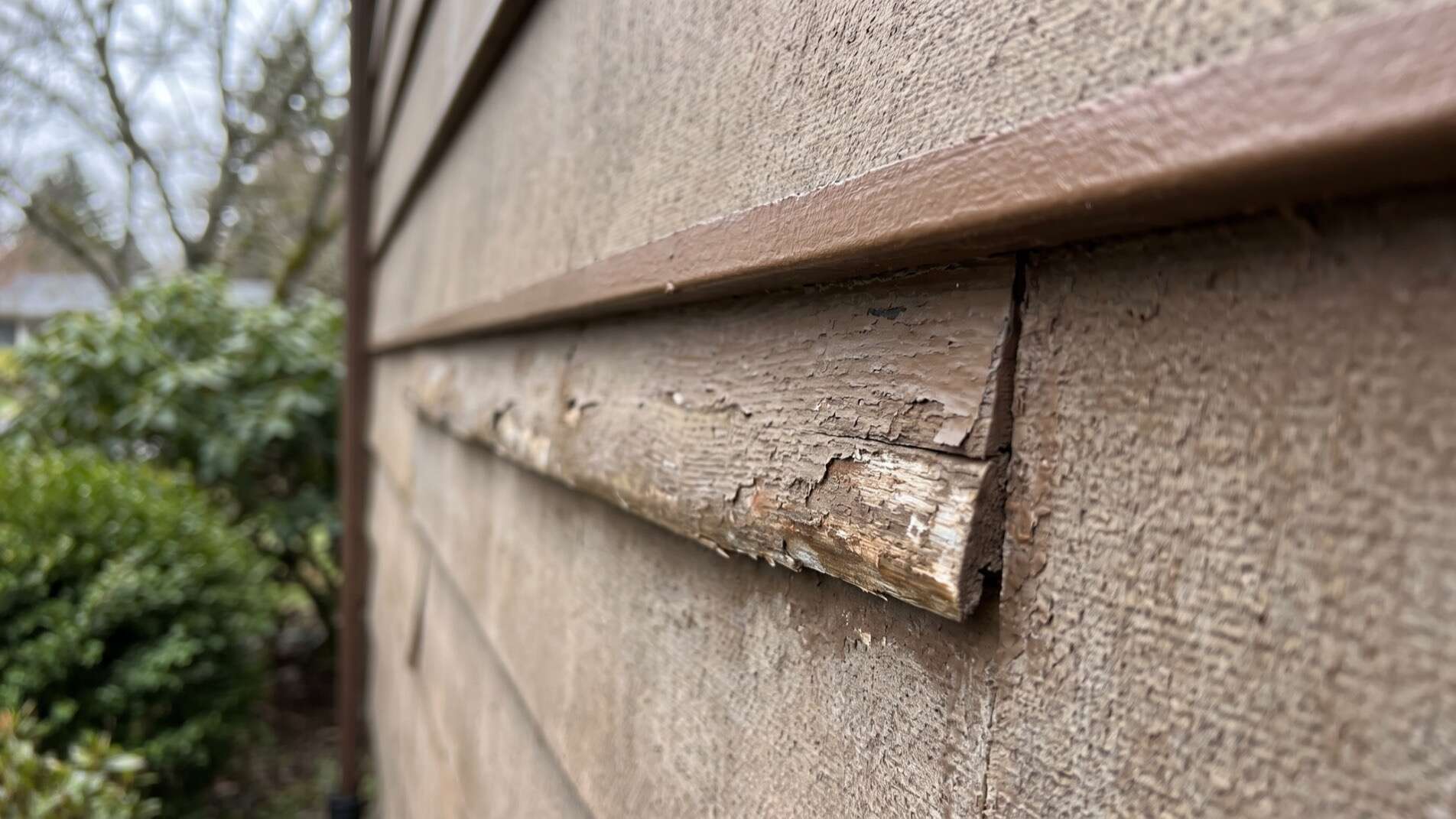
Freeze-thaw cycling is the main event. Water finds every hairline crack in your coating and caulk, soaks in during a 40-degree afternoon, then freezes overnight and expands roughly 9%. Each cycle pries that crack wider, and this valley strings together dozens of them between November and March. A crack you’d need a fingernail to find in October can be visible peeling by April.
North-facing walls take the worst of it. In Eagle, especially up toward the foothills where lots sit higher and shadows run long, a north wall can stay frozen or damp for weeks. Ice lingers on trim and sills, and mildew gets a running start the moment things warm up.
Snow load works on the horizontal surfaces: fascia boards, window trim caps, deck rails, the tops of pot shelves on stucco homes. Snow piles up, melts from the heat escaping the house, refreezes at the edges, and pushes water backward under the paint line. Meanwhile the south side keeps taking UV, because high-desert sun ignores the season.
The 15-Minute Walk-Around: Your Numbered Checklist
Pick a dry afternoon. Wear something you don’t mind getting dusty and give yourself a quarter of an hour. Work the numbers in order and you’ll cover the whole house without a ladder.
- Start on the south wall and use your hand. Drag an open palm across the siding at chest height. Powdery pigment on your skin is chalking, which means the binder at the surface has broken down and the coating has stopped shedding water properly.
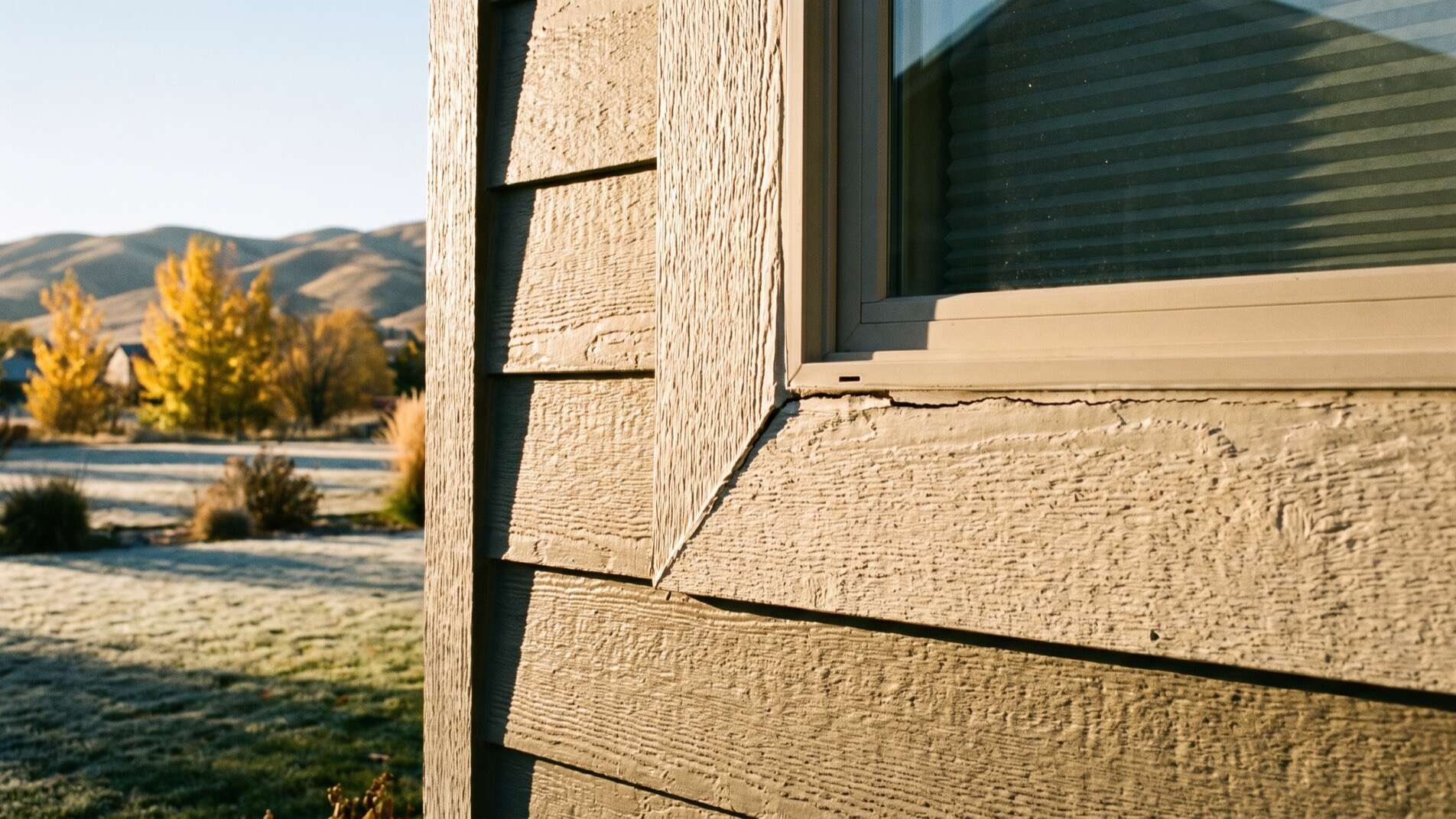
- Check the caulk at every window and door casing. Look for lines that are split, shrunken, or standing away from the surface. Failed caulk is the front door for winter moisture and the most common problem we find on 15-to-25-year-old homes around here.
- Follow the butt joints in your lap siding. These are the vertical seams where two boards meet end to end. Any gap you can slip a fingernail into needs sealant before the freeze cycles start.
- Run your eye along the bottom course of siding. Splashback from rain and sprinklers does quiet damage down there. You’re looking for swelling, a wavy lip, or a dark line along the underside.
- Move to the north side and look at color before you look at cracks. Gray-black shadowing is mildew, and it tells you that wall holds moisture long enough to grow something.
- Pull back the shrubs and check what the sprinklers reach. Any wall hit by irrigation all summer will fail years before its neighbors. Bare spots, bubbling, and staining show up here first.
- Scan the fascia and eaves from the ground. Dark streaks, sagging, or a section that reads a different tone than the rest usually means water has been running where it shouldn’t.
- Look at every horizontal surface you own. Trim caps, pot shelves, deck rails, and railing tops collect snow and hold it. These fail before vertical walls do, every time.
- Find bare wood. Anywhere the substrate is showing through, the clock is running. Wood that goes through a full winter unprotected often needs repair rather than repaint by spring.
- Photograph everything you flagged, with something in frame for scale. Photos make the spring conversation fast, specific, and much harder to guess at.
Now score it. Zero or one flag and your exterior is fine through next season. Two or three and you should plan on paint next spring. Four or more, or any bare wood from step nine, and it’s worth getting professional eyes on the house before the snow.
That checklist is yours. Send it to a neighbor. If you’d rather have someone else run it, call 208-972-0565 and we’ll walk it with you at no cost.
Why Booking Off-Peak Beats the April Rush
Every April the same thing happens across the Valley. The first warm stretch arrives, everyone looks at their peeling trim on the same weekend, and painting calendars load up for months almost overnight. Homeowners who call in April frequently wait until June or July while their bare spots sit open through the wettest part of the year.
Booking in late fall or over the winter inverts that. There’s no line for an estimate now, so you get an appointment when it suits you, plus first choice of the early-season starts. Your project begins as soon as overnight temperatures cooperate, your house spends the least possible time exposed, and your summer stays free of ladders and drop cloths.
Off-season estimates are also better estimates. With the problem areas fresh and visible, we can show you what’s failing and why, compare your photos against what we find, and write a scope with no guesswork in it. Colors get decided calmly too. Choosing a palette in January with real samples beats deciding while a crew loads the sprayer.
To be completely clear: booking early is a planning move. The painting still waits for the weather. Quality exterior work needs stable temperatures and dry surfaces, and we won’t start until the conditions genuinely allow it.
What Booking Early With Funky Painting Looks Like
Call us and we’ll come out for a free estimate any time this fall or winter, at the house rather than over the phone. Somebody walks the perimeter with you, flags what the coming winter will make worse, and follows up with a written scope and price.
If small caulk or trim repairs are worth doing now to limit damage before spring, we’ll point those out too, whether or not they come to us. Then you pick your spot on the calendar. When your window opens we handle the whole job: washing, scraping, sanding, priming bare wood, fresh sealant at every joint, and two coats of premium product matched to your substrate.
We’re up in Hidden Springs and Avimor regularly too, where elevation and exposure make that north-wall problem even worse. Our Eagle service area page covers the neighborhoods we’re in most, and our exterior painting overview breaks the job down step by step.
There’s a real satisfaction in pulling up in April to a house you first walked in October, with the photos and the scope already settled, and just getting to work. Those are the smoothest projects we run all year, and the crew knows it.
FAQ
Can you paint my house exterior during the winter?
We don’t, and we’d steer you away from anyone who says they will. Coatings need stable temperatures and dry substrate to bond and reach full hardness, and winters here supply neither. A film applied in the cold may look acceptable for a season and then fail all at once. Winter is for inspecting and booking. Spring is for painting.
When does exterior painting season start in the Treasure Valley?
Around April, once overnight lows stay consistently above the minimum our premium products are rated for, and it runs through roughly the middle of October. The earliest starts each year go to homeowners who booked over the winter, which is the practical reason we suggest handling it now.
What are the signs my house will need paint next spring?
Chalky residue when you rub the siding, caulk cracked or pulled back at joints and casings, peeling or bubbling on north-facing walls, dark streaks down the fascia, and any exposed wood. Two or more of those on your fall walk means paint belongs in next year’s plan. Bare wood alone moves it up the list.
How much does exterior painting cost in Eagle?
Eagle exteriors typically fall between $3,000 and $8,000, with cedar and larger custom homes running to $10,000. Booking in the off-season doesn’t change the price and doesn’t commit you to anything. What it does is put a written scope and a firm number in your hands months early, which is a much calmer way to decide.
Does it cost anything to book a spring project early?
Nothing at all. The estimate is free and there’s no deposit to claim an early spot on next season’s calendar. You get a written price now and first pick of April and May start windows. If your plans change over the winter, you tell us and we release the slot, no hard feelings.
Take the Walk, Then Take a Spot on the Calendar
Give your Eagle home 15 minutes this month, then call Funky Painting at 208-972-0565. We’ll come out for a free estimate, show you what winter is about to work on, and lock in an early start for spring 2027\. You can also begin on our contact page.
We’re a Google Guaranteed contractor, and every exterior we paint is backed by a 5-year workmanship warranty. If our application peels, blisters, or flakes, we come back and correct it. Winter can do its worst this year. Your house will be ready for the next one.